In God We Trust? Coming to terms with the shift to the so-called “anthropocene”.

How does one even begin to make sense of this given the shift from the Holocene to the “Anthropocene”?
In God We Trust banner

Abstract:

The advent of the “Anthropocene” is much discussed and highly contested amidst the climate change, ocean acidification, sea-level rise, viral pandemics and a rapid loss of biodiversity that are there for all to see. According to the Anthropocene Working Group of International Commission on Stratigraphy, the “Anthropocene” can be dated at least to the mid-20th century. If so, the stability of the Holocene is no more. How can “we” come to terms with this shift across the many current global divides? Addressing this question is a multi-disciplinary task in which Christian ecotheology can only play a minor role. This paper will explore such a contribution from the perspective of a 12-year-long collaborative project entitled “An Earthed Faith” which invites ecumenical conversation across such global divides. For 2023 this project focuses on the theme of God’s providence, reflecting on the core Christian conviction that God cares for us, for the whole of God’s creation. This conviction is itself highly contested as the use of the phrase “In God we trust” on the USA dollar bill indicates. More specifically, this presentation will focus on one aspect of providence, namely the trust in God’s just governance in history. This is widely tested and contested, nowhere more than in the Pacific region. How does one even begin to make sense of this given the shift from the Holocene to the “Anthropocene”?

Details

Date: September 27th 2023, nibbles from 6pm, lecture from 6:15pm.
Location: Maclaurin Chapel, 18 Princes Street, Auckland.


About the Speaker
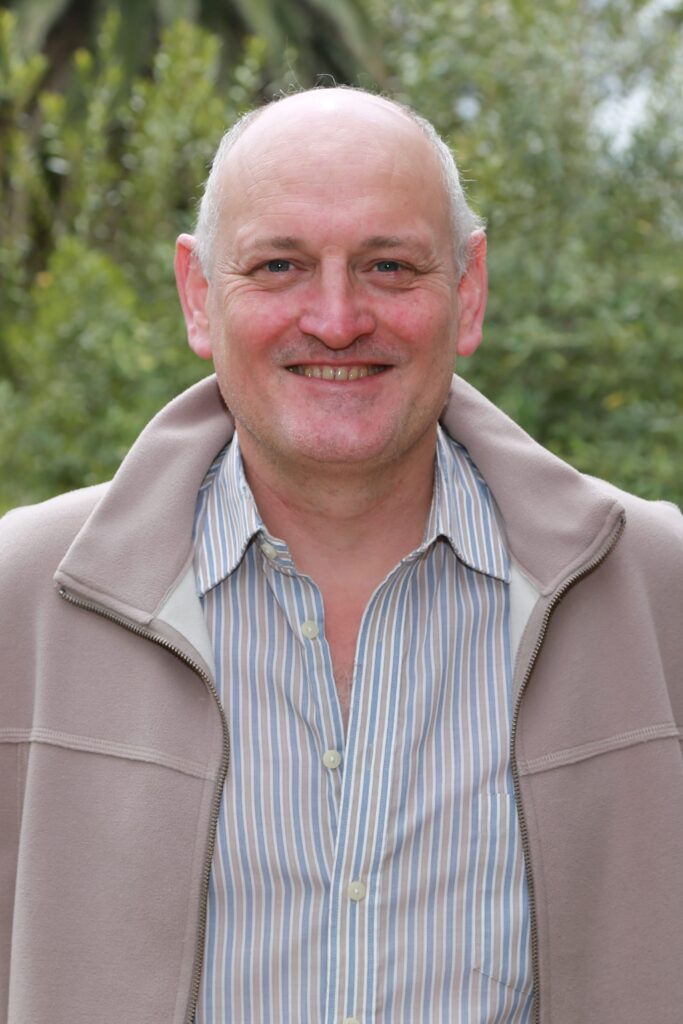
Ernst Conradie
Prof. Ernst Conradie

Ernst M. Conradie is senior professor in the Department of Religion and Theology at the University of the Western Cape, South Africa, where he teaches systematic theology and ethics. He specialises in Christian ecotheology. He is currently involved in a collaborative research project entitled An Earthed Faith: Telling the Story amid the “Anthropocene”.
You may also like

NZCIS at the Maclaurin Chapel

NZCIS at the Maclaurin Chapel

At NZCIS we integrate the two great articulate systems of our time, science and religion, and these discussions have an impact on our understanding of climate change, AI, evolution, the status of human beings, the nature of the cosmos and so on. We support and promote an holistic, evolutionary understanding of cosmic and biological history, in dialogue with and informed by Christian faith. We invite open dialogue and partnership with Mātauranga Māori and those of other faiths. And we seek to partner with all those working to heal the earth and to live more lightly on it.
Science for the Churches

Science for the Churches

Come for a mix of science and faith - where scientific curiosity meets ultimate faith concerns and climate urgency. Topics covered; AI and faith, Climate change and Creation, God and the Big Bang in UK Churches, Young and old scientists speak of their experience, Science funding as a spiritual concern, And more!

New Perspectives on Evolution & Christianity

11 June - 23 July 2026 | The old formula of evolution by natural selection is undergoing pressure. The idea that all change over many aeons occurred through random mutation followed by the survival of the fittest has been modified, expanded upon, and, in some ways, upended in recent decades. Convergence and constraints, evo devo, the ubiquity of altruism in the mammalian tree, cooperation as a driver of development, and epigenetics are among the emphases that subtly change our paradigm of evolution. In this six-part series, the ISCAST-NZCIS Conversations bring together international biologists and theologians to highlight newer understandings of evolution and their repercussions for theology.
No results found.